Modified Books Hiding Contraband
Three SecondsModified Books Hiding Contraband are six ordinary-looking library books that Piet Hoffmann secretly alters to carry materials into Aspsås prison. Four conceal amphetamine for his campaign to take over the prison drug market; the other two hide components of a miniature revolver, a listening device, and explosives. The books matter not only as containers but as a way to exploit the prison’s ordinary circulation system: literature rarely requested by inmates can pass through as library stock while serving a hidden criminal and tactical purpose.
Selection and preparation
The books come from the Aspsås library and are seldom requested, a circumstance marked by blue STORAGE notes on their front pages. The six titles are Don Juan, The Odyssey, My Life’s Writings, French Landscape, Nineteenth Century Stockholm, and The Marionettes. Their obscurity makes them useful to Hoffmann because the concealed spaces are less likely to be noticed through routine handling or demand for the books.
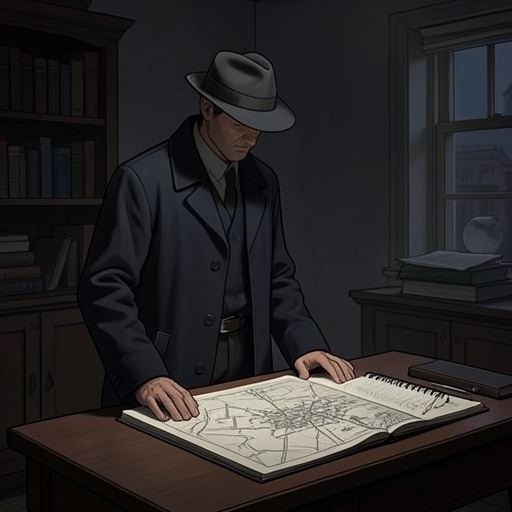
Hoffmann’s work on them begins at his office on Vasagatan, where he brings down tins hidden in a fan heater and clears his desk. His sons, Hugo and Rasmus, watch cartoons nearby while he works. The domestic setting gives the preparation a double character: the books are being made into instruments of a prison operation while the children experience the office as a place associated with their father’s work and their own visits. When Hugo asks what he is doing, Hoffmann says he is reading; the apparent explanation fits the object in his hands while concealing its actual purpose.
The first volume is Lord Byron’s Don Juan, a hardback of 546 pages. Hoffmann removes a thick central section and fashions a concealed cavity within the pages, lining its walls so that the interior is even. The resulting space can hold fifteen grams of amphetamine. He restores the intact opening pages over the hidden compartment and presses the book back together. The careful reconstruction is central to the disguise: from the outside, the volume remains a library book rather than a container.
Hoffmann prepares The Odyssey, My Life’s Writings, and French Landscape in the same general way. His expertise predates this operation: over ten years, he had prepared hundreds of novels, poetry collections, and essays to carry small quantities of amphetamine, usually without detection. The difference now is that he intends to use the method himself inside Aspsås. The concealed books are not a new technique but a familiar one redirected toward a prison campaign he is personally undertaking.
More than drug containers
The remaining books conceal different kinds of contraband. In Nineteenth Century Stockholm, Hoffmann hides the separated components of a miniature revolver, including its ammunition. The concealed parts are meant to be recoverable as a weapon, rather than functioning as a complete firearm while hidden. The book therefore holds a potential means of lethal force within a form associated with reading and study.
The Marionettes contains a small detonator and a receiver intended to pick up sound transmitted from devices placed elsewhere. Separately, Hoffmann conceals pentyl fuse and nitroglycerine in the hollowed cover of Nineteenth Century Stockholm, whose larger format gives him more room. The same volume thus carries both the revolver components and explosive materials, while The Marionettes holds the listening equipment. Together, the books extend the cache beyond the drug operation: it includes means of violence and remote listening as well as the product intended for sale.
The narrative distinguishes the amphetamine volumes from these other books by their immediate use. Four are emptied for the prison drug market; Nineteenth Century Stockholm and The Marionettes remain on Hoffmann’s bed, unused at that point. Their continued presence makes them a reserve rather than part of the first distribution, and Hoffmann hopes he will never need to read them. The books are therefore both an active supply and an unspent contingency.
Entry into the prison and use
The titles reach the prison through a mundane institutional route. Because they are seldom borrowed, they must be collected from storage in the library basement when a request arrives. A prison librarian hands them to the driver of the library bus, and they are delivered as books for inmates to borrow. This chain gives the concealed objects a legitimate-looking passage into the facility; they are not described as being brought in openly by Hoffmann at the prison gate.
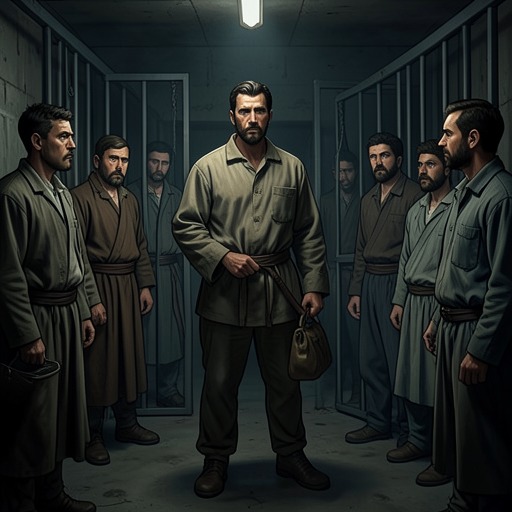
Hoffmann’s first arrival at Aspsås is a tightly controlled admission. He has previously mapped the buildings from the church tower and learned about the staff and prisoners in Block G, but entering the high-security prison is new to him. Guards escort him through registration and search procedures, issue him prison clothes, and place him in isolation. Ten days pass in a cell where he spends twenty-three hours a day behind a metal door, with no visitors, newspapers, television, or radio. Once he is moved into the unit and begins establishing his place among its inmates, the books become part of the means by which he acts within that closed environment.
In his cell, Hoffmann opens Don Juan with a knife stolen from the kitchen and finds the amphetamine still concealed inside. The substance is yellowish-white and sticky; he removes it from the book’s hidden compartment. He then empties The Odyssey, My Life’s Writings, and French Landscape as well. The four books contain a total of forty-two grams of manufactured amphetamine, described as thirty percent strength. Hoffmann monitors sounds outside his cell as he works, pausing when footsteps or unfamiliar noises pass. The concealment has brought the supply into the prison, but recovering it still requires attention to the rhythms of the unit.
Function in the prison economy
The books are a means of changing Hoffmann’s position in a market where drugs shape daily life. Prisoners seek ways to obtain drugs and avoid detection by routine urine tests; Hoffmann’s earlier experience as a smuggler has taught him how valuable a concealed supply can be. In the past, he consumed much of what he brought in himself, sometimes selling excess or using it toward debts. This time, he chooses a different purpose: the forty-two grams are his weapon for removing the main dealers and taking control of the trade.
He says he needs three days to eliminate the competition and intends to avoid contact during that period while bringing in enough supply. After he has used the four books, he considers the first step taken: the three principal dealers have been brought down, and reports have reached Warsaw as the operation moves toward its next stage. The books have therefore helped convert a prepared plan into action inside Aspsås. Their role is practical and strategic, but also revealing: Hoffmann’s knowledge of concealment, once used in criminal smuggling, now becomes the infrastructure of his undercover prison operation.
Significance
The books depend on a sharp contrast between their public identity and their hidden contents. Their titles remain visible, their pages can be handled, and their route into the prison resembles ordinary library circulation; beneath that familiar surface are drugs, weapon parts, listening equipment, and explosives. Their literary form is not decorative. It supplies the cover that makes the concealed objects portable and difficult to distinguish from legitimate reading material.
That transformation also ties the books to the prison’s larger structures of control. Aspsås regulates movement, contact, and access to goods, yet its own library system provides a channel through which Hoffmann’s altered volumes can circulate. The institution’s ordinary routines become part of the operation without ceasing to look ordinary. By making the books simultaneously readable objects, concealed caches, and instruments of a struggle for power, the narrative gives material form to Hoffmann’s ability to perform an acceptable identity while acting beneath it.